Monday, October 19, 2020

Ali was the Hacker #WWERaw

 It was Ali, dear reader. It was Ali all along!


RETRIBUTION started off this week’s episode of Monday Night Raw by getting their ass handed to them, first by The Hurt Business and then by The Fiend. In Bray Wyatt’s case, he single-handedly beat up the entire group all by his lonesome.

They lost their first match, and then lost a 1-v-4. What a way to put the band of chaotic troublemakers over, huh?

Later, Mustafa Ali cut the above promo where he revealed that they just need to create some more chaos and he’s really good at that. All he needs is a laptop or a cell phone. If that made you think of the mysterious SmackDown hacker who was exposing people and causing trouble as a sort of privacy invading vigilante, you aren’t the only one.


Sure enough, Ali said he was the hacker all along.

Back to your regularly scheduled chaos with a side of defeat.

Saturday, May 6, 2017

How Randy Orton proved to be a Weak Champion

Jinder Mahal SmackDown Feud Has Exposed Randy Orton as Weak WWE Champion


At WWE Backlash 2017 on May 21, Randy Orton will defend his WWE Championship against Jinder Mahal. So far, the feud has received mixed reviews from fans. Above all else, however, it has exposed Orton as being a weak WWE champion.
Mahal's shoehorning into the title picture after losing almost every match he had been involved in for months on end hasn't helped matters, but in his defense, he has done a decent job of reinventing himself and coming across like a legitimate threat to the champion.
Orton, on the other hand, has been far from compelling since capturing the title from Bray Wyatt at WrestleMania 33. That rivalry had run its course after eight long months, and this feud with Mahal hasn't been much better.
Having recently celebrated 15 years on WWE's main roster, Orton remains a cornerstone of the company and can lend credibility to those he works with. Unfortunately, he just isn't at all interesting as a babyface world champion regardless of the Superstar he's facing.
Although he has yet to do well in the role, taking the title off Orton at Backlash would be premature considering Mahal isn't ready for such a spot. There are ways he can freshen up his stagnant character to ensure the rest of his reign as champ isn't as lifeless.

In 2010, Orton embarked on the hottest babyface run of his career shortly following the dissolution of The Legacy. It wasn't long before he was contending for the WWE Championship, eventually winning it to a raucous reaction in Chicago at that year's Night of Champions event.
At that point, he was exciting to watch in the ring and largely let his actions do the talking. Somewhere along the way, he lost that edge and has been reduced to a boring shell of his former self.
It's no secret Orton is significantly more comfortable as a heel than he is as a babyface, but he doesn't have to turn in order to thrive as a titleholder. Rather, he needs to return to being that laid-back babyface we saw in the summers of 2015 and 2016, when he was more focused on having fun and entertaining the audience.
We also saw shades of that side of Orton during his time with The Wyatt Family. Granted, he held the SmackDown Tag Team Championships for a total of two weeks, but it was the most captivating his character has ever been, so holding gold is not what makes him feel uninspiring.
If Orton can tap back into what made him a fan favorite to begin with, his title reign could be as enthralling as it has the potential to be, especially with the slew of stars he is bound to do battle with in the coming months

AJ Styles is an obvious opponent for Orton, and their matches are guaranteed to be good. That feud may not take place until SummerSlam, and in the meantime, The Viper will need to prove himself as a credible champion.
Since beating Wyatt for the belt at 'Mania, Orton hasn't been the focal point of SmackDown Live. Instead, a majority of the focus has been on Styles and Kevin Owens' pursuit of the United States Championship.
As high profile a bout as Styles vs. Owens is, in theory, it should not take precedence over the WWE Championship, which has come across like an afterthought as of late. In fact, it is possible that Orton vs. Mahal doesn't close out Backlash and will be relegated to the midcard.
That harkens back to how Orton is incapable of carrying a brand on his back with this incarnation of his character. SmackDown surely could use main event-level heels, and a turn from Orton would be welcomed, but he is needed as a face for his pending programs with Mahal and likely Rusev.

While Orton has failed to deliver during his latest reign as WWE champion, there is still plenty of time for him to restore relevance to the title and inject excitement into his feud with Mahal.

Thursday, April 27, 2017

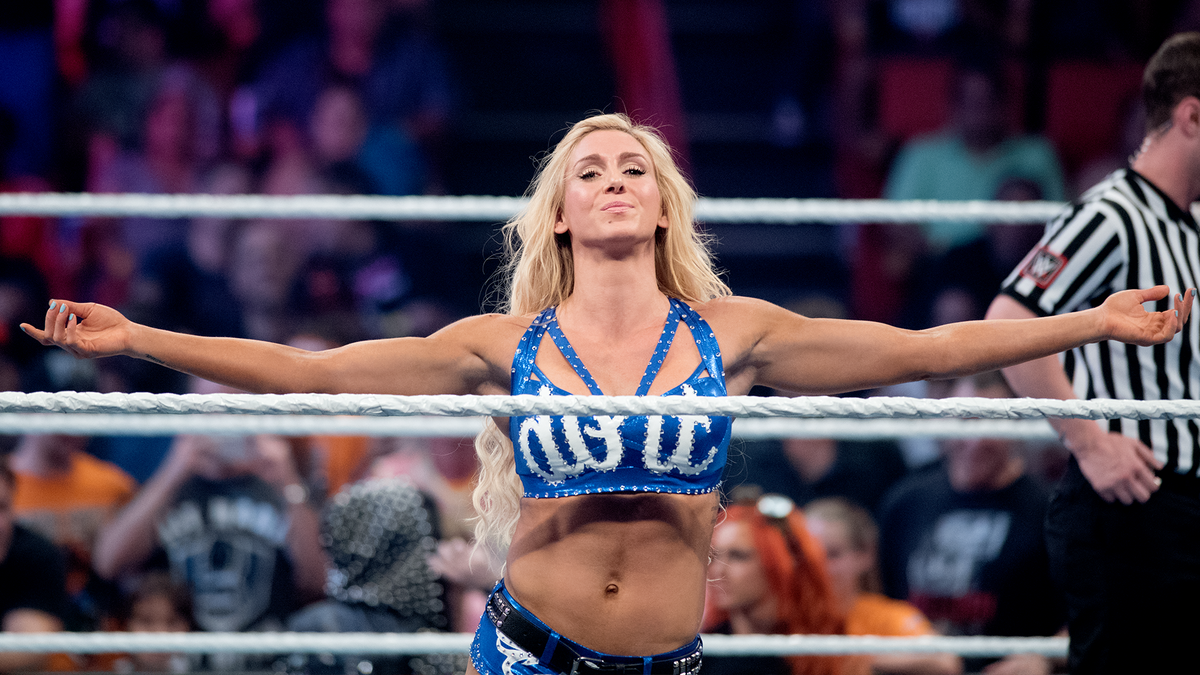
Wwe Female Superstar Charlotte Becomes 1st Woman in WWE History to Main Event PPV, Raw and SmackDown


WWE announced Wednesday that Charlotte Flair made history by becoming the first female Superstar in company history to main event a pay-per-view, Raw and SmackDown in singles matches.
Charlotte accomplished the third part of the equation Tuesday when she fought SmackDown Women's champion Naomi to a no contest in the main event of SmackDown Live.


The daughter of WWE Hall of Famer Ric Flair previously competed in multiple main event matches against Sasha Banks on Raw, as well as at Hell in a Cell.
Charlotte and Banks were the first women in WWE history to do battle inside Hell in a Cell, as well as the first women to have an Iron Man match on the main roster.

The Queen is a four-time Raw Women's champion, but her sights are now set on the SmackDown Women's title after moving to the blue brand as part of the Superstar Shake-up.


In order to reach the pinnacle of SmackDown's women's division, however, it appears Charlotte will be forced to go through the group of Natalya, Carmella and Tamina. 

Tuesday, April 25, 2017

Call of Duty: WWII is the ‘right game at the right time’


“It always seems to happen like that,” Activision CEO Eric Hirshberg explained, recognizing a trend. “We're all plugged into the same cultural rhythms to a certain extent. Specifically to us, three years ago when we greenlit this thing, we definitely just thought it was time to take the franchise back to its roots.”
With news that Call of Duty is returning to its origins with the recently confirmed Call of Duty: WWII, Hirshberg spoke with Polygon in advance of the game’s reveal tomorrow about why it was time to return to World War II, where the Call of Duty franchise is at and the tension between being consistent and keeping the series fresh.
“I wouldn't refer to it as a pitch, it's a conversation,” Hirshberg said, when asked how studio Sledgehammer Games found itself at the helm of this “back to its roots” installment. Just how it is that Sledgehammer Games found its sophomore Call of Duty effort a departure from 2014’s well-received Advanced Warfare is at the heart of how Activision thinks about its key property.
As stewards of the franchise, a rung above the studios making the actual games, Hirshberg and his team at Activision are responsible for juggling three parallel game development schedules for one game franchise. And in 2014, they decided it was time to take the series back to World War II after what would be nearly a decade away from it. Around the same time, Electronic Arts was making a bet years into the future that it was time for Battlefield to return to a historical setting for last year’s World War 1-set Battlefield 1. I asked Hirshberg where this realization that the audience was ready to go back came from.
“Well I certainly can't comment on any influences that might have an impact on our competitors, I can speak for us and you know I totally acknowledge that these things do seem to happen in waves like this,” he said. “I mean three years ago when we dreamed up this game and decided it was time to go back to our roots, we could not have known at that time that the year we would launch it would be a year in which there would be several World War II movies in the theaters and that there would be other competitors going back to historical settings.“
While Activision may have recognized that it was time for a reset, Sledgehammer Games was next in line to deliver a Call of Duty game. I asked Hirshberg if this decision was delivered to the team or if it was generated from them?
“In this particular case I do think the impetus for the discussion started with those of us who manage the franchise overall.” But it was a discussion and not a pitch, Hirshberg said, “because we know that without a lot of passion and a lot of vision from the team, and a lot of excitement from the team, we’re never going to be successful without those things. So the conversation took on a life of its own very quickly.
“These things are always a dialogue because you have to have a creative team that’s passionate about the opportunity, because I don't know too many great or successful games that have come out of teams that weren't passionate about making them. The good news is that when we sat down with Michael [Condrey] and Glen [Schofield] and the leaders at Sledgehammer they were immediately super excited about it and they came back with a huge vision not just for how to take us back to our roots, but a lot of new ideas to make it fresh as well.
For more on our impressions from the game’s reveal event, check back tomorrow at 1 p.m. ET.
A hard reset is well-timed after the negative reception of last year’s Infinite Warfare, which pushed the franchise’s boots-on-the-ground legacy the further than ever. Of course, when greenlighting WWII, Hirshberg and team couldn’t have known that Infinite Warfare would be something of a lightning rod for the audience. (Disclosure: I really likedInfinite Warfare!)
“I think it's a really good game,” Hirshberg said about last year’s installment. “I think it can be simultaneously true that it was a really high quality game that Infinity Ward did a really terrific job with and the game was delivered at a very high level, creatively — and that it might have been the wrong game at the wrong moment in terms of getting that rhythm right with the audience and with the culture.”
Making bets as to what will resonate with audiences years out is made more complicated by Activision’s move to a three-year cycle, which started with Sledgehammer Games’ first Call of Duty title, Advanced Warfare.
“The advantages of a three-year cycle are clear: there’s more time to innovate, there’s more time to polish, there’s more time to iterate, there’s more time for all the things that gamers care most about development teams having. At the same time, it increases the degree of difficulty, to an extent, getting that balancing act right,” Hirshberg explained, referring to the balance between consistency and freshness, a theme he returned to throughout our call. “The good news is we’ve gotten it right more often than not and more often than most. But I think, in the case of last year, I think both things were true.”
The same process that guided Infinite Warfare to its space setting after the lackluster launch of 2013’s Call of Duty: Ghosts also recognized that the series needed to return to its roots. The desire to retain a sense of the familiar while also reaching for something new, seems to have been taken to an extreme at the moment WWII was greenlit nearly three years ago.
Hirshberg and his team decided the audience was ready for a throwback to the series’ beginning and, despite shipping the well-received, future-oriented Advanced Warfare prior, Sledgehammer Games was the studio to it.

A FULL RESET

Treyarch Studios, the team behind Call of Duty’s Black Ops series, and Infinity Ward, the team behind the excellent but ultimately misfired Infinite Warfare, both appear to find themselves unburdened from sub-franchise expectations and free to find new stories.
Even as the Call of Duty series continues to claim the top sales spot every year, its future seems more open-ended as a franchise than it has since the introduction of Modern Warfare in 2007.
With the release of Advanced Warfare, following Ghosts and Black Ops 2, Activision seemed poised to repeat the success it had with Modern Warfare and then Black Ops, with development teams trading off on trilogies, allowing time for one to finish while another is still running its course.
“[The parallel] trilogy concept you talked about, that’s really only happened for a very brief overlap in actuality,” Hirshberg said. “Black Ops 1 came right before Modern Warfare 3, so there was a year or year-and-a-half of overlap where those two coexisted.”
While that brief overlap may be true, it’s also true that there hasn’t been a series of three “new” Call of Duty games divorced from an existing sub-franchise or setting in its history. It’s hard to imagine that Activision wouldn’t have been happy with either Ghosts or Infinite Warfare becoming viable sub-franchises.
“When a sub-franchise has legs and catches momentum, of course we follow that as we did with Modern Warfare, as we’ve done with Black Ops,” Hirshberg said. “Look even within those sub-franchises, look at the three Black Ops games, those three games have a lot of diversity from game to game. Across that series there’s different time period, different movement mechanics, different lead characters.”
When asked if the apparent clean slate for Call of Duty presented a unique challenge, Hirshberg pushed back. “I think the franchise is Call of Duty,” he said. “The sub-franchises have mattered much less than the overall franchise.”
For Hirshberg, Call of Duty is less about setting or character continuity than it is a familiar set of mechanics. “I think that Call of Duty, the franchise, is about a core set of tenets that make the game the best moment-to-moment shooter out there, combined with the relentless commitment to finding ways to keep things fresh and trying new things.”
Call of Duty’s challenge as a franchise is to consistently find the new, fresh things every year. That annual release schedule, with its focus on new features and settings coupled to familiar mechanics, is at the heart of Call of Duty’s success. This is no secret, but it presents unique challenges when taken to the competitive scene.

THE ESPORTS CHALLENGE

How does Call of Duty become a top tier competitive game when its audience, at any given point, is:
  1. Split across three and sometimes even four iterations of the franchise
  2. Running on multiple platforms, including last-gen consoles, current-gen consoles, PC and even Nintendo systems
  3. Further divided between players with access to the paid DLC maps and players without
Compare this to a competitive staple like Counter-Strike: Global Offensive, which was released in 2012, is played primarily on PC, and where paid upgrades are cosmetic in nature.
While maintaining a massive aggregate audience is certainly an advantage not every would-be esport has, Call of Duty’s singular multi-title, multi-platform install base has created a similarly unique challenge at a time when success in the booming space is more of a necessity than a choice.
“It’s a very complex and interesting set of problems for us to solve,” Hirshberg said. “I would say it’s a matter of prioritization. Call of Duty is first and foremost about what’s going to make for a fun game. For that pursuit, I think our annual release and the diversity we’ve brought to the franchise with that model, is a huge asset. Obviously there are things about the game, the core mechanics, that make it the best moment-to-moment shooter experience out there, that lends itself very well to esports as well. Which is why it’s been the most viewed esport, at least on console, for many years now.
“That said, the underlying strategy is different from other games that are big in esports and I think you’re right, it creates interesting challenges. But I also think that it can create an advantage because it keeps it fresh for viewers. The challenges we’re talking about are challenges for the players, which I think makes Call of Duty esports players the most elite, because there is an element of adaptation in addition to skill, but for viewers there’s a new reason to show up not just to play the new game every year but to watch the new season as well. It cuts both ways.
“At the end of the day, esports is something we’ve been focused on for a long time. It’s a strategic priority for us, with Call of Duty, and for Activision Blizzard overall. We’re committed to making it a great esports experience and we think we can strike the right balance between keeping it fresh and keeping it consistent.

THE RIGHT GAME AT THE RIGHT TIME

The tension between a need to keep releasing new games, every year, each one tasked with contributing something new to the now 14-year-old franchise, while also retaining what it is that makes the franchise itself is at the heart of Hirshberg’s franchise management strategy.
“There’s no other franchise in any medium that I can think of that’s got an annual release, first of all, also that stayed on top of the charts for this many years in a row, Hirshberg said. “The most important thing is to find a way to strike ... the right balance. If the game’s not familiar enough, then it doesn’t deliver on the things that people love about the franchise. And if it’s not fresh enough, they can get bored. And we’ve dealt with both ends of that continuum.
“But when you get that balance right, I think that’s when you get the best games and the best fan response and the best results overall. I think this is one of those years where it feels like the right game at the right time being made by the right team.”

Jinder Mahal :The reason why he's the next best thing and is gonna be a superheel?


What's the matter? 
   Jinder Mahal?
That’s probably what you were thinking when Mahal won a Six-Pack Challenge on Smackdown Live last week to become the No. 1 contender for the WWE championship.
That’s the same Jinder Mahal who lost to Finn Balor in minutes on RAW three weeks ago; and the same Jinder Mahal who was embarrassed again by the New England Patriots’ Rob Gronkowski during Mahal’s Smackdown debut two weeks ago. Oh, and the same Jinder Mahal who was brought back to WWE last summer to seemingly help fill out the roster after the brand extension.
Mahal is expected to face Randy Orton at Blacklash on May 13 for the championship.
“I know how hard I’ve worked and I know what I’m capable of,” Mahal said on Talking Smack . “I will prove to everybody — despite everybody hating you, nobody giving you opportunities and you earning opportunities — you rise to the occasion and become a champion here in WWE. So when I become champion it’s going to be Jinder ‘The New American Dream.'”
Using Dusty Rhodes’ moniker is probably a good way to get booed and putting a strong heel character works against Orton, but take a step back and try to separate the man from the character.
At a time when fans complain that WWE puts the same performers in top positions, Mahal is a departure, even if those same fans are still complaining.
But he also represents using a second chance to improve on a first impression.
Mahal was released with 10 other performers in June 2014 after four years with the company, including almost three years on the main roster. At the time, he said he was surprised because he felt like 3MB – a group with Mahal, Drew McIntyre and Heath Slater – had been filling the role the company had asked them to play.
Mahal began working for independent promotions, making appearances in Canada, Puerto Rico, Qatar, Japan, India and the United States. McIntyre, also released at the time, would travel around the world, becoming world champion for TNA and twice for Insane Championship Wrestling, based in the United Kingdom.
   Mahal, 30, returned last summer, having to “beat” Slater in a match to earn a contract with Monday Night RAW. McIntyre, 31, a former Intercontinental champion in WWE, recently began appearing in NXT and seems poised to make a big impact.
“I don’t know (Jinder) was as fully ready for the experience (on the main roster) as I would have liked him to be,” Paul “Triple H” Levesque, WWE’s executive vice president of talent, live events and creative, told For The Win . “Drew and Jinder are in some ways similar — two guys who were very young and very green, but I liked them a lot when they were here.
“Jinder is a guy who has always worked extremely hard. He trains hard; he’s very intense about what he wants with his career; he’s very thoughtful. That’s the same with Drew. That opportunity came for them when you’re too young and not ready for it and a little immature to it. (When they left), I had a conversation where I told them, ‘We’re not going to be able to do more with you here. Go other places, learn more in your career, mature and think about the business in a different way.’ Sometimes you get reliant on other people telling you what to do instead of going out there and figuring it for yourself, which is what you have to do.
“To Jinder’s credit and to Drew’s credit, they left, they went and figured it for themselves, they improved. They’re both men now as opposed to kids trying to make it in the business. They see their careers differently and what they want and are still extremely hard workers and great people. Now hopefully they are in a better position to succeed.”
Mahal has completely reinvented his body to the point where he has veins popping out everywhere and improved physical conditioning has led to better work. He also has said he gave up alcohol last June to help change his body for his WWE return. And yes, he knows what you’re thinking.

My Take :
 
     Ofcourse, it makes sense to push him to that level

Why?

I say Why not?


  • He got a Pure Heel reaction, which we barely got since long time 
  • We're getting a Pure Heel vs Pure babyface match and feud  since long time 
  • Is he being overrated? 
  • Is his reactions being edited like Roman's 
  • Is he being shoved down and talked about throughout the show? 
  • Is the backlash because he doesn't get cheered like other heels like AJ STYLES?.. Well that's what a heel must get (boos) 
  • Isn't he doing the job he's been given (A HEEL) 
  • did he won his match clean for becoming the contender 
  • Where are the SMARKS who advocate for Real talents and brag about opportunities? 
  • Is this a real fact he's getting heat because of being anti American and a guy with ugly face? Well if yes, even though he's doing it perfect, cause he's not a superman babyface 
  • He Is not getting a long time push 

  • And last but not the least he's got charisma to be company's top heel 
  Note: Definition of heel :A heel is a wrestling role which relates a pro wrestler to be a cheater,no matter  ugly or good looking , Villainous and trash talker, less skilled guy 

WWE Released A Batch Of Wrestlers And Announcers From NXT

In addition to Simon Gotch and Tajiri , WWE’s post-WrestleMania spring cleaning includes a batch of Superstars and announcers from NXT.
The latest names to get the acts are former Tough Enough winner Josh Bredl , NXT competitor Chris Atkins, and backstage interviewer Andrea DiMarco.
Bredl is the most notable name on the list as 2015’s male winner of the sixth season of Tough Enough, earning a $250,000, one-year contract. He made his in-ring debut for NXT in December of that year under the name Bronson Matthews. He also competed as “The Yeti,” but not the giant mummy that once
sexually assaulted Hulk Hogan .
Atkins, affectionately known at With Spandex as “the worst wrestler in the history of NXT,” joined the WWE Performance Center in November of 2015 and began competing in-ring and on television in 2016. He once lost to Mojo Rawley in one move, and once lost to Eric Young after delivering no offense whatsoever.

Ali was the Hacker #WWERaw

  It was Ali, dear reader. It was Ali all along! "That mysterious hacker over on #SmackDown ... that was ME.” - @AliWWE #WWERaw pic.t...